

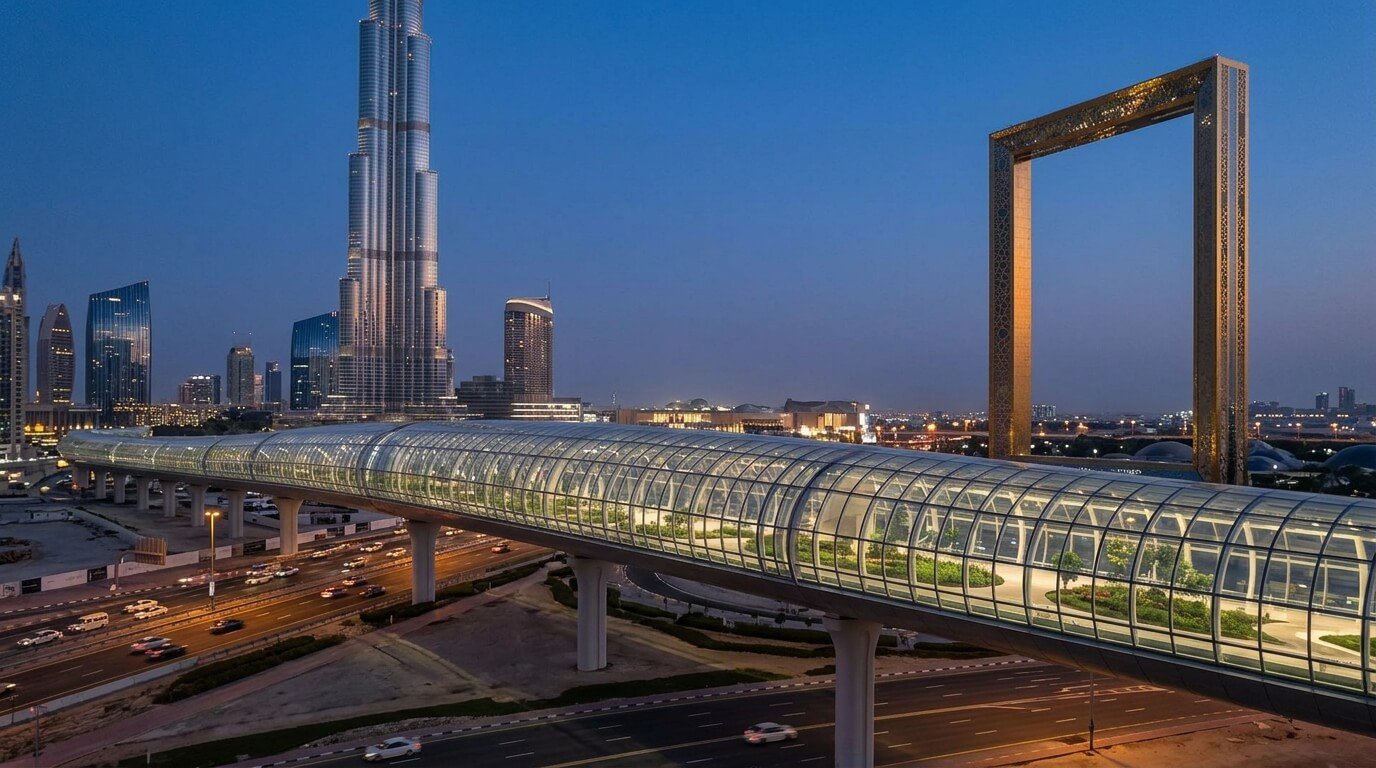
All the details you need to know
Dubai is preparing for another ambitious leap in futuristic transport with the introduction of the Dubai Loop, an underground transit system backed by Elon Musk’s The Boring Company. Designed to reduce congestion and speed up cross-city travel, the project is expected to reshape how people move through some of the city’s busiest districts.
What is the Dubai Loop?
The Dubai Loop is a planned underground transportation network featuring high-speed tunnels built specifically for electric vehicle transit. Developed by The Boring Company, the system aims to move passengers directly from one station to another without intermediate stops, creating a fast, point-to-point travel experience beneath the city.
The project is expected to have a total capacity of up to 30,000 passengers per day once fully operational, making it a significant addition to Dubai’s growing smart mobility infrastructure.
Unlike traditional metro systems, the Dubai Loop uses compact tunnels designed to reduce construction disruption above ground while offering faster travel speeds and more direct routes.
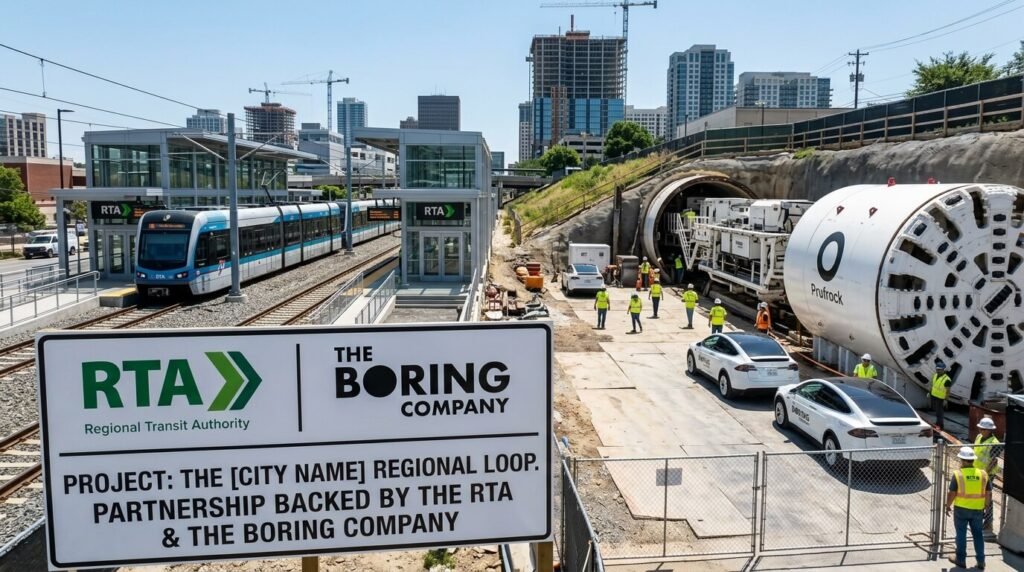
Following the announcement, the project gained momentum with The Boring Company advertising key roles in Dubai, including architects, engineers and construction managers—an indication that early-stage development is actively progressing.
Station Locations Revealed
The first phase of the Dubai Loop has already outlined key station locations within some of the city’s most important commercial and tourism hubs.
Initial stations include:
- Zabeel Dubai Mall Parking
- ICD Brookfield Place
- DIFC 2
- Burj Khalifa area
These stops form part of a 6.4km pilot route designed to test the system in high-density urban areas where traffic congestion is most severe.
Phase One: Pilot Route Development
The first phase of the Dubai Loop will focus on building a 6.4km underground corridor connecting central business and retail districts. This pilot segment will act as the foundation for future expansion across the wider network.
The system is designed for high-speed travel, with vehicles expected to reach speeds of up to 160km/h inside the tunnels. Each journey will be direct, with no stops between the selected origin and destination stations.
According to early projections, the pilot route alone is expected to serve around 13,000 passengers daily once operational.
Full Expansion Plans
Beyond the pilot phase, the Dubai Loop is planned to expand significantly into a much larger underground network. The full system is expected to stretch up to 22.2km and include as many as 19 stations across key districts.
Future expansion areas are expected to include:
- Dubai World Trade Centre
- Business Bay
- Dubai International Financial Centre (DIFC)
- Surrounding financial and commercial zones
This broader network aims to connect major business hubs and high-traffic areas, improving mobility across central Dubai.
How the Dubai Loop Will Work
The system will use 3.6-metre diameter tunnels designed specifically for electric vehicles. These tunnels are built using advanced boring technology that allows for faster construction, reduced cost and minimal disruption to existing roads and infrastructure.
Passengers will enter a station, board an electric vehicle, and travel directly to their destination without intermediate stops. The system is designed to function like a private ride within a shared underground network.
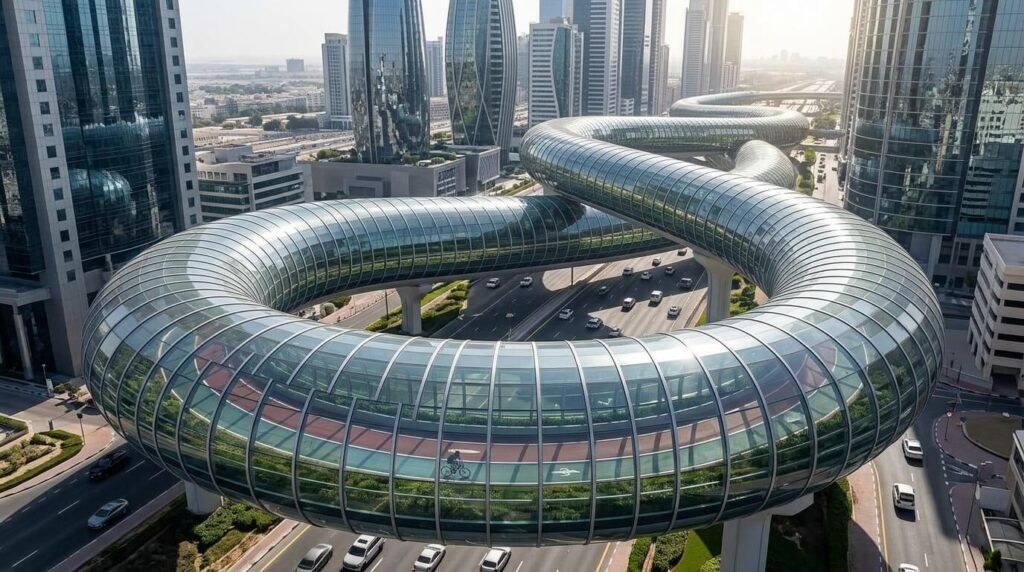
The concept is similar to The Boring Company’s existing Loop system in Las Vegas, which has already transported millions of passengers using an all-electric underground network.
Lessons from Las Vegas
The Las Vegas Loop provides a working example of how the technology operates in real-world conditions. Since launching in 2021, it has transported more than 2 million passengers and continues to expand across key locations.
Like the Dubai version, the system is fully electric, zero-emissions, and designed to bypass surface traffic entirely. Its success has been used as a reference point for similar projects in other global cities, including Dubai.
Why Dubai Loop Matters
Dubai’s traffic congestion has long been a focus for urban planners, particularly in rapidly developing districts where road capacity struggles to keep up with population growth.
The Dubai Loop aims to provide a long-term solution by moving traffic underground, freeing up surface roads while offering faster, more reliable journeys.
Supporters of the project say it could significantly reduce rush-hour delays and improve connectivity between major business and leisure hubs.
What Happens Next?
While the project is still in its early stages, progress appears to be moving forward with recruitment activity and early planning already underway. The pilot route is expected to be the first major milestone, paving the way for broader expansion across the city.
If completed as planned, the Dubai Loop could become one of the most advanced underground transport systems in the world, aligning with Dubai’s wider vision for smart, sustainable urban mobility.
FAQs
The Dubai Loop is an underground transport system developed by The Boring Company, designed to move passengers quickly between stations using electric vehicles in tunnels.
The project is backed by Elon Musk’s The Boring Company in partnership with Dubai’s Roads and Transport Authority (RTA).
Initial stations include Zabeel Dubai Mall Parking, ICD Brookfield Place, DIFC 2, and the Burj Khalifa area.
Vehicles inside the tunnels are expected to reach speeds of up to 160km/h.
The first phase includes a 6.4km pilot route connecting key central Dubai locations.