

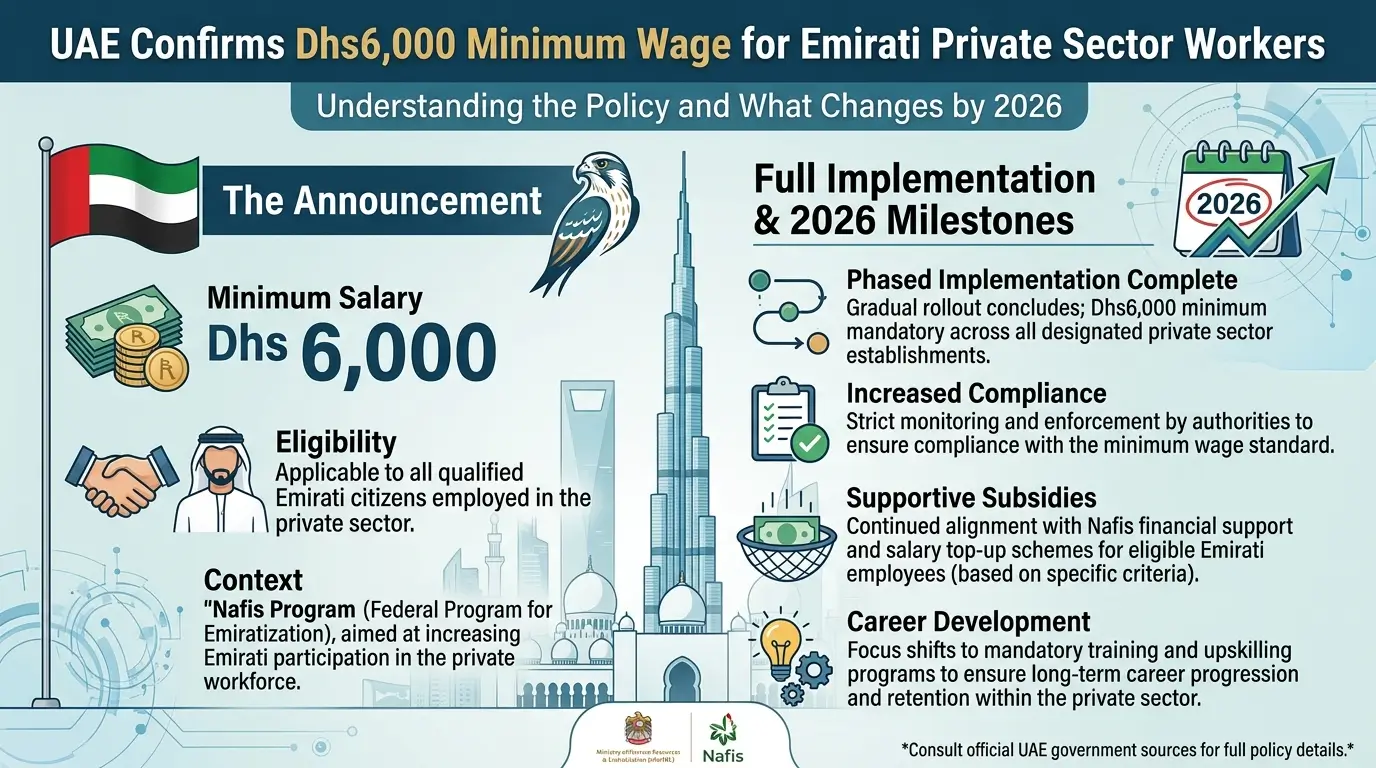
The UAE has officially introduced a significant minimum wage increase for Emirati nationals working in the private sector, with the new salary floor set at Dhs6,000 per month.
The rule took effect on January 1, 2026, and private companies must update eligible employees’ salaries before the government’s compliance deadline. The announcement, made through the Ministry of Human Resources and Emiratisation (MoHRE), forms part of the country’s ongoing Emiratisation initiatives.
Here’s everything employers and workers need to know.
Dhs6,000 Becomes the New Minimum Salary
Under the updated regulations, private sector employers must ensure that Emirati employees earn at least Dhs6,000 per month.
This replaces the previous minimum salary of Dhs5,000, representing a Dhs1,000 increase for eligible workers.
The new salary requirement applies when companies:
- Issue new work permits
- Renew existing permits
- Modify citizen work permits
The changes became effective from January 1, 2026.
Who Is Covered by the New Rule?

The increase applies only to Emirati nationals employed in the private sector.
MoHRE clarified that the requirement is linked specifically to citizen work permits, meaning it does not create a universal minimum wage for every employee working in the UAE.
The ministry also stated that these rules will apply to citizen work permits for an initial period of two years.
June 30 Is the Key Compliance Deadline
Although the rule is already in force, businesses have until June 30, 2026, to bring eligible salaries into compliance.
Companies have been notified through the MoHRE Smart App, giving employers several months to update payroll systems and employment records before enforcement measures begin.
What Happens If Companies Don’t Comply?
From July 1, 2026, businesses that fail to adjust eligible salaries may face several administrative consequences.
Potential measures include:
- Emirati employees with salaries below Dhs6,000 no longer counting toward Emiratisation targets.
- Restrictions on issuing new citizen work permits until salary requirements are met.
- Additional compliance notes appearing during work permit processing.
The ministry says these measures are designed to encourage employers to meet the updated salary requirements.
How the New Work Permit Rules Will Work
According to MoHRE, work permit applications involving Emirati employees will be checked against the new salary threshold.
If the salary listed is below Dhs6,000, employers may be prevented from completing permit issuance, renewal or modification until the required adjustment is made.
The system will also notify employers that salary updates are necessary before the compliance deadline.
What About Non-Emirati Workers?
The announcement has prompted questions about expatriate employees.
Currently, UAE federal law does not set a universal minimum wage for non-Emirati workers in the private sector.
Instead, employment regulations require wages to be sufficient according to contractual agreements and applicable labour laws, but no fixed nationwide minimum salary has been introduced for expatriate employees.
Why the Change Matters
The increase is part of the UAE’s broader efforts to strengthen Emirati participation in the private sector.
By raising the minimum salary requirement and linking compliance to work permit processing and Emiratisation targets, the government aims to support citizens entering and progressing within private companies while ensuring employers meet updated employment obligations.
Key Dates at a Glance

| Date | What Happens |
|---|---|
| January 1, 2026 | New Dhs6,000 minimum salary takes effect |
| June 30, 2026 | Deadline for employers to update salaries |
| July 1, 2026 | Compliance measures begin for businesses that fail to meet requirements |
FAQs
The minimum salary for Emirati nationals working in the private sector has increased to Dhs6,000 per month.
The rule applies only to Emirati employees in the UAE’s private sector.
Yes. The minimum salary has increased from Dhs5,000 to Dhs6,000.
Private sector employers must update eligible salaries by June 30, 2026.
From July 1, 2026, companies may face restrictions on citizen work permits, and affected employees may not count toward Emiratisation targets until salaries are corrected.
Final Thoughts
The UAE’s Dhs6,000 minimum wage for Emirati private sector workers marks one of the country’s most notable employment policy updates for 2026. While the increase applies specifically to UAE citizens rather than all workers, employers must ensure eligible salaries are updated before the June 30 deadline to avoid restrictions that begin in July.