
Dubai is a city built on ambition, innovation, and constant reinvention—and its transport network is no exception. While the emirate already boasts some of the world’s most advanced roads and infrastructure, traffic congestion remains one of the few challenges residents regularly face.
Now, that’s about to change.
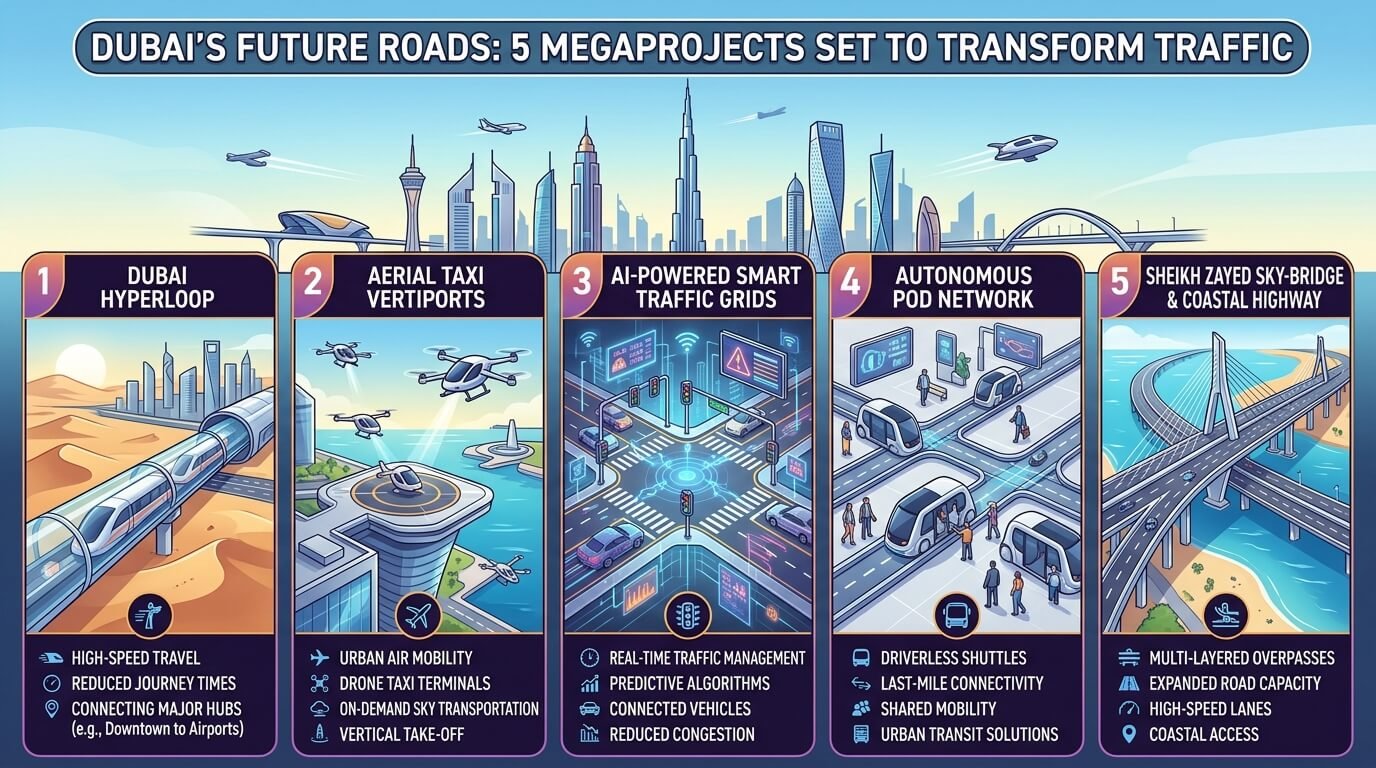
A wave of futuristic transport megaprojects is set to completely reshape how people move around the city. From driverless taxis and underground tunnels to flying cars and smart “20-minute city” planning, Dubai is preparing for a mobility revolution that could redefine urban transport globally.
Here are five of the most exciting traffic-changing megaprojects currently underway or in development across the emirate.
1. Driverless Taxis Arriving in Dubai
Autonomous transport is no longer science fiction in Dubai—it’s becoming reality.
The city has officially launched its driverless taxi programme, backed by advanced AI systems, smart sensors, and autonomous driving technology. The initiative is led under the vision of His Highness Sheikh Hamdan bin Mohammed bin Rashid Al Maktoum, who has championed smarter, safer, and more sustainable mobility solutions.
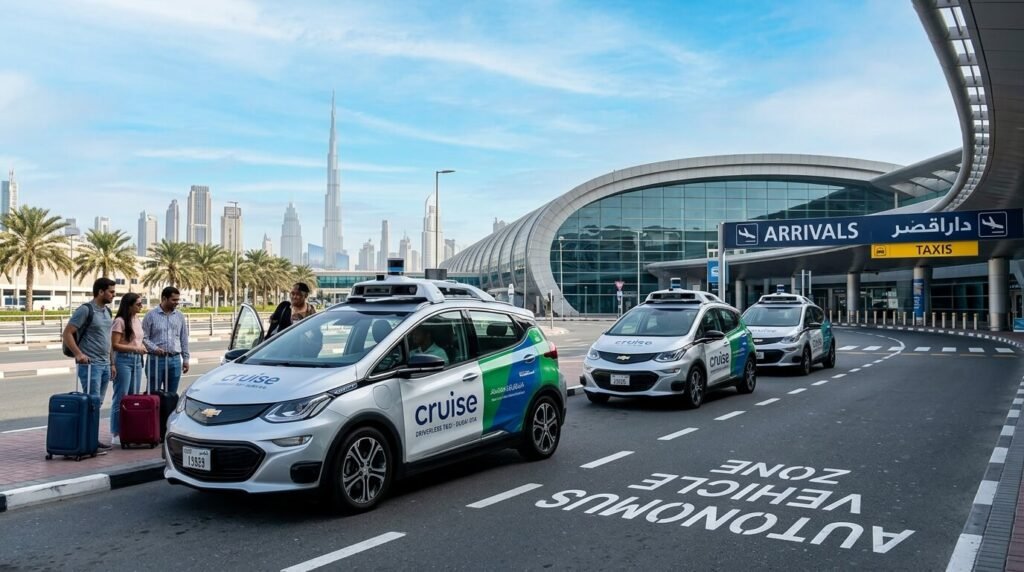
The first phase will introduce around 100 autonomous taxis on Dubai’s roads by March 2026. These vehicles are designed to operate without human drivers, using AI-powered decision-making systems to navigate traffic safely and efficiently.
A demonstration ride in an RT6 Baidu Apollo autonomous cab has already showcased the technology in action, highlighting Dubai’s commitment to becoming a global leader in smart mobility.
2. The Dubai Loop Underground Transport Network
One of the most ambitious projects in development is the Dubai Loop, created in partnership with Elon Musk’s The Boring Company.
This underground transport system will feature high-speed tunnels designed to bypass surface traffic entirely. The network is expected to eventually carry up to 30,000 passengers per day once fully operational.
The first phase includes a 6.4km pilot route with stations planned at key locations such as Dubai Mall parking, ICD Brookfield Place, DIFC, and Burj Khalifa.
Long-term plans extend the system to more than 22km with up to 19 stations, connecting major business and financial districts including Business Bay and the Dubai World Trade Centre.
The system is designed for point-to-point travel with no intermediate stops, with speeds reaching up to 160km/h—dramatically reducing journey times across central Dubai.
3. Glydways Personal Transit System
Another futuristic mobility solution being explored is Glydways, a next-generation autonomous transport system.
Unlike traditional metro or bus networks, Glydways uses small self-driving electric pods that travel on dedicated guideways. These compact vehicles can carry between four and six passengers and are designed for high-frequency, on-demand travel.
The system is expected to move more than 10,000 passengers per hour in each direction, with speeds reaching up to 50km/h. Each pod also offers an impressive range of up to 250km.
Because the system operates on its own dedicated infrastructure, it avoids road congestion entirely. Plans include routes connecting key destinations such as Bluewaters, Alserkal Avenue, Madinat Jumeirah, and Dubai Festival City, with potential rollout targeted for the end of 2026.
4. The 20-Minute City Vision
Dubai is also rethinking how urban life is structured with its bold “20-minute city” concept.
This initiative aims to ensure that residents can access up to 80 percent of essential services—such as schools, healthcare, shopping, and leisure—within a 20-minute journey using walking, cycling, or sustainable transport.
The idea is to reduce dependency on cars, ease congestion, and create more liveable, community-focused neighbourhoods.
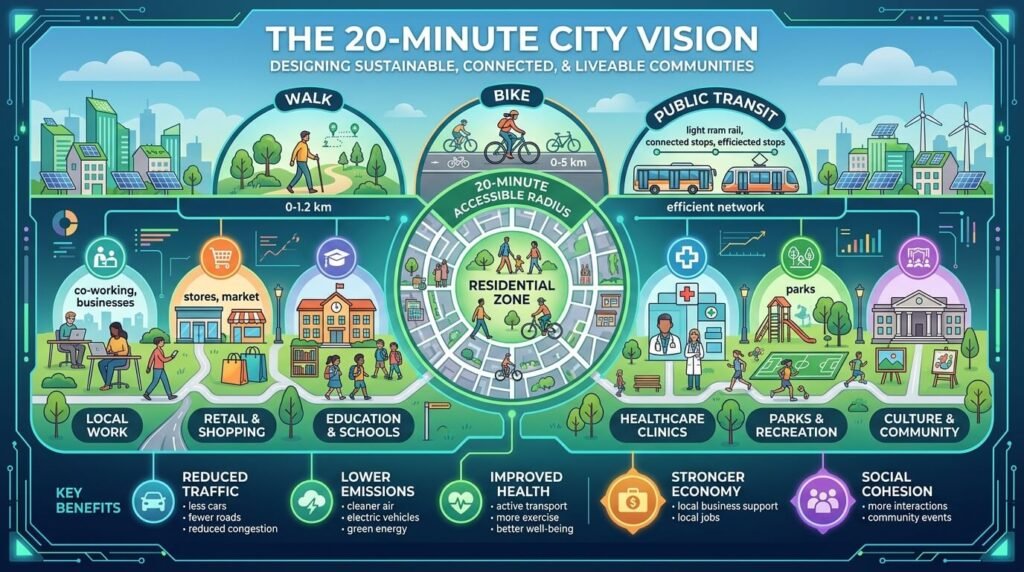
Already underway in areas like Al Barsha 2, the project is part of the broader Dubai 10X initiative, which aims to position the city a decade ahead of global urban standards.
The plan also includes improved pedestrian pathways and the wider Dubai Walk Master Plan, encouraging healthier and more sustainable urban mobility.
5. Flying Taxis Taking to the Skies
Perhaps the most futuristic of all developments is Dubai’s upcoming flying taxi service.
Set to launch in 2026, electric air taxis will allow passengers to travel across the city in a fraction of the time it takes on the road. Early plans suggest journey times as short as 10 minutes between major landmarks.
The project is a collaboration between the Roads and Transport Authority (RTA), JOBY Aviation, and Skyports Infrastructure. Initial operations will begin from four key vertiport locations across Dubai.
The goal is to create the world’s first fully operational, city-wide electric air taxi network, offering a completely new way to avoid road traffic and move efficiently across the emirate.
A New Era of Mobility in Dubai
Together, these five megaprojects represent a major shift in how Dubai approaches transportation. From underground tunnels and autonomous vehicles to airborne taxis and walkable neighbourhoods, the city is investing heavily in future-ready infrastructure.
While some of these projects are still in development, others are already beginning to take shape—and all point toward a future where traffic congestion could become a thing of the past.
Dubai isn’t just building roads anymore. It’s building the future of transport.
FAQs: Dubai’s Upcoming Traffic Megaprojects
Key projects include driverless taxis, the Dubai Loop underground network, Glydways pod system, the 20-minute city plan, and flying taxis.
Flying taxi services are expected to begin operations by the end of 2026.
They will be electric air taxis operating from designated vertiports, offering fast point-to-point travel across the city.
To reduce traffic congestion, improve travel efficiency, support population growth, and create a smarter, more sustainable transport system.
Not entirely, but they aim to reduce car dependency by offering faster and more efficient alternatives for daily travel.
Read More:
- UAE Petrol Prices for July 2026 Announced: Here’s What You’ll Pay
- 13 Fancy Dubai Restaurants to Visit When You’re Not Paying the Bill
- The Best Things to Do in Hatta for a Proper Adventure
- 8 Ways to Celebrate the Gorgeous Winter Season in Dubai
- You Can Now Book Tickets to Watch the BTS World Tour Live in Dubai (But There’s a Twist)