
Dubai’s skyline has undergone one of the most dramatic transformations in modern urban history, and few developments have influenced that change as strongly as Burj Khalifa. When construction began in 2004, the area that would become Downtown Dubai looked very different from the polished destination visitors know today.
The tower gradually rose above a developing landscape, eventually reaching 828 metres and opening officially on January 4, 2010. But Burj Khalifa was never simply a standalone skyscraper. It formed the centrepiece of a much larger development that brought homes, hotels, shopping, entertainment, restaurants and public spaces together.
Historic photographs from different stages of construction reveal just how dramatically Downtown Dubai evolved around the landmark. From open stretches of developing land to one of the world’s most recognisable city centres, these 11 snapshots help tell the story.
1. Before Burj Khalifa, Downtown Dubai Was Still Taking Shape
Older views of the area offer a surprising contrast to the busy district visible today. Large parts of the landscape were still under development, with open areas, construction equipment and unfinished infrastructure dominating the scene.
There were not yet crowds gathering around the Dubai Fountain or visitors looking up at the completed Burj Khalifa. The district was part of Dubai’s broader expansion, but its now-famous identity had not yet been established.
These early images are useful because they reveal how much of Downtown Dubai was built from the ground up during a relatively short period.
2. The Tower First Appeared as a Construction Project
When work started on the skyscraper in September 2004, few photographs could predict how important it would eventually become to Dubai’s image.
During the earliest stages, the building did not immediately resemble the distinctive tower seen today. Construction progressed from foundations and lower levels before the structure began climbing steadily into the sky.
As each new section appeared, the building became increasingly visible from different parts of the city.
3. The Changing Skyline Was Visible Long Before Completion
One of the most fascinating aspects of the construction photographs is watching Burj Khalifa gradually change Dubai’s skyline.
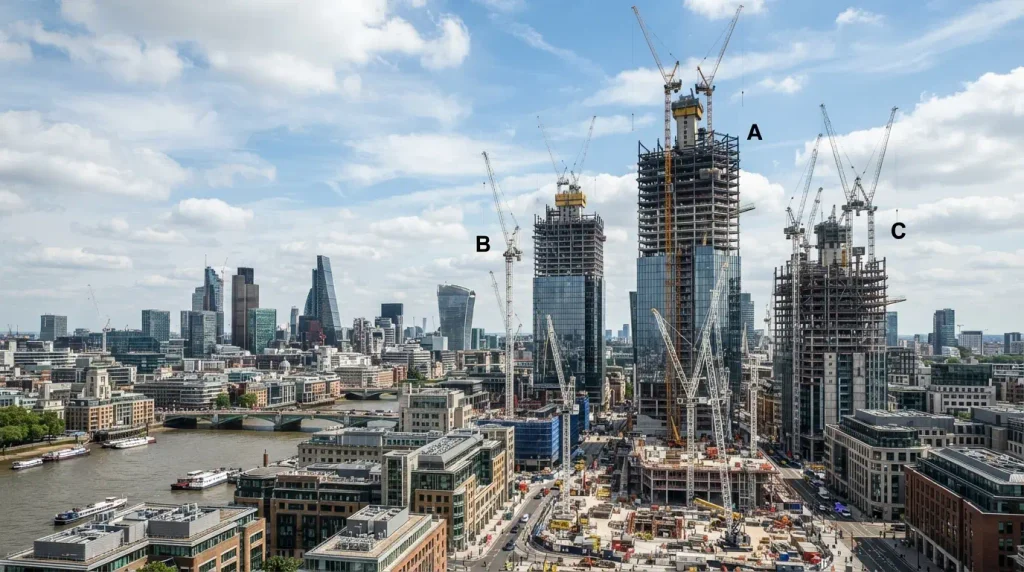
At first, the surrounding buildings remained visually dominant. Then the tower began rising above them. Eventually, it became impossible to overlook, standing dramatically higher than the developing buildings around it.
The progression shows how quickly a single structure can alter the visual identity of an entire urban area.
4. Downtown Dubai Expanded Around the Landmark
Burj Khalifa may have been the star attraction, but the transformation of Downtown Dubai depended on the neighbourhood developing alongside it.
Residential towers, hotels, offices, restaurants and retail spaces gradually filled the surrounding area. Roads and landscaped spaces also became part of a broader master-planned district.
Instead of creating a solitary architectural icon, the development created an entire destination designed around a central landmark.
5. The Dubai Mall Added Another Major Reason to Visit
The arrival of The Dubai Mall helped change Downtown Dubai from a developing neighbourhood into a major destination for residents and international visitors.
As one of the world’s largest shopping and entertainment centres, the mall brought an enormous range of retail, dining and leisure experiences to the area.
Its close relationship with Burj Khalifa strengthened the district’s appeal. Visitors could combine a trip to the tower with shopping, restaurants and other attractions without leaving Downtown.
6. The Dubai Fountain Changed the Way People Used the District
Another major development was the Dubai Fountain, which helped give Downtown Dubai a strong public gathering space.
The area around the fountain became a popular place for visitors to relax, take in the skyline and watch choreographed water performances. This created a different type of urban experience from the surrounding skyscrapers and shopping destinations.
Historic images showing the area before and after its completion demonstrate how infrastructure and public attractions contributed to the transformation.
7. Burj Khalifa Became Dubai’s Defining Visual Symbol
As construction neared completion, Burj Khalifa moved beyond being simply an ambitious development project. It became an internationally recognisable symbol of Dubai.
At 828 metres, the tower dramatically changed photographs of the city. Whether viewed from the roads, beaches, surrounding districts or aerial perspectives, its silhouette quickly became associated with Dubai.
The skyline suddenly had a focal point that could be recognised around the world.
8. The Surrounding Buildings Made the Skyline Even More Dramatic
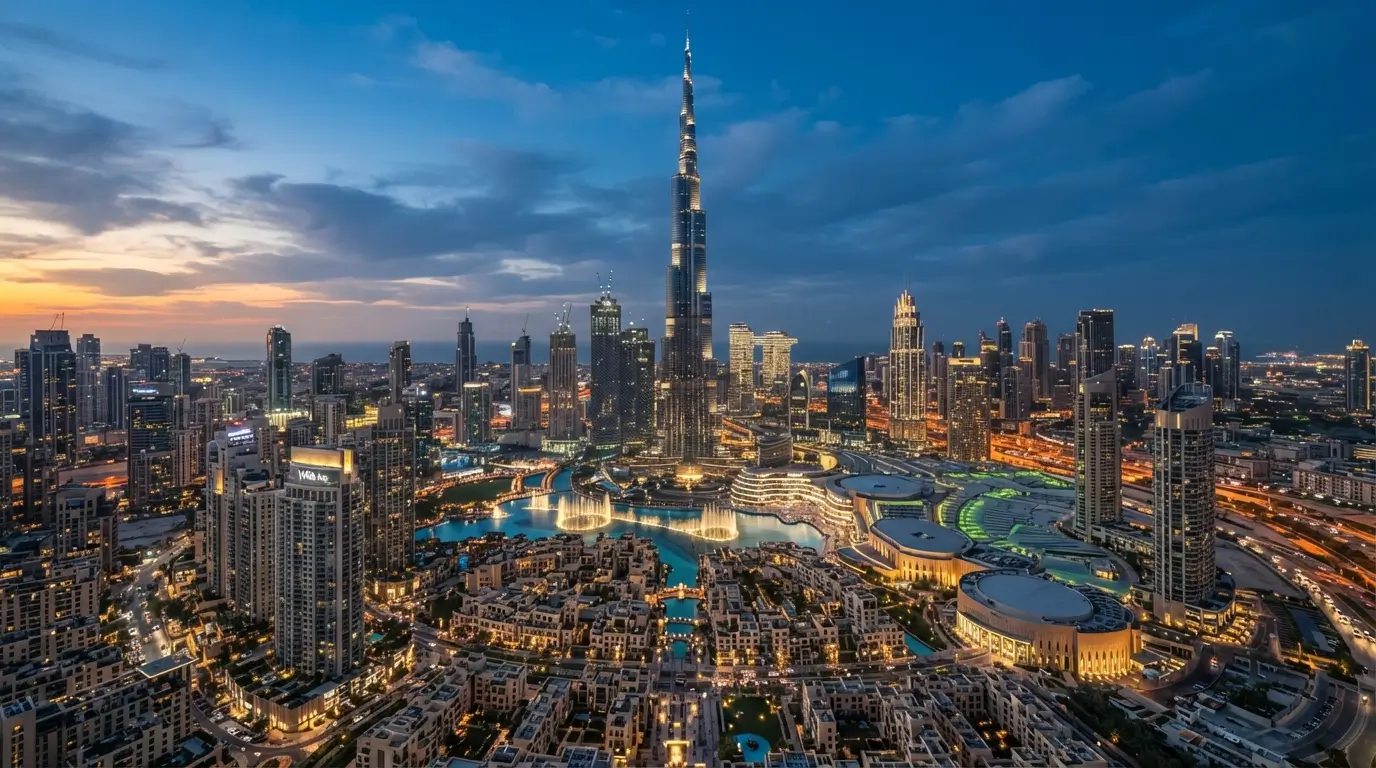
The finished Downtown skyline is not made up of Burj Khalifa alone. Buildings constructed around it helped create the dense urban environment seen today.
Modern residential towers and hotels frame the central skyscraper, producing layers of architecture that make the district visually distinctive.
Comparing early construction photographs with recent street-level views shows how an almost open landscape developed into a high-rise neighbourhood.
9. Roads and Walkways Helped Turn Development Into a Destination
The transformation was also visible at street level. Roads, pedestrian routes, landscaped areas and public spaces gradually connected the different parts of Downtown.
This infrastructure allowed people to move between the tower, mall, fountain, hotels, restaurants and residences more easily.
The result was not simply an impressive skyline but a neighbourhood designed around movement, tourism and everyday urban life.
10. Downtown Dubai Developed a New Lifestyle Identity
As more businesses and residents arrived, Downtown Dubai became associated with a particular style of city living.
Luxury hotels, upscale restaurants, modern residences and entertainment venues helped establish the area as one of Dubai’s prominent lifestyle districts.
The change is particularly clear in historical photographs. Places that once appeared dominated by construction cranes eventually became busy streets filled with pedestrians, traffic and visitors.
Burj Khalifa provided the architectural centrepiece, while the surrounding development created the lifestyle environment that supported it.
11. Old and New Photographs Tell the Biggest Story
Perhaps the most striking comparison comes from placing historical and modern images side by side.
Early views show a city centre still waiting to emerge. Modern photographs reveal a highly developed district dominated by one of the world’s most recognisable towers.

The contrast demonstrates that Burj Khalifa’s impact cannot be measured only by its height. Its construction coincided with a much broader transformation of Downtown Dubai, changing the skyline, public spaces and way people experienced the area.
How Burj Khalifa Redefined Downtown Dubai
The story of Burj Khalifa is ultimately a story about urban transformation. The tower created a powerful focal point, but its wider impact came from everything built around it.
Downtown Dubai developed into a combination of architecture, retail, hospitality, dining and entertainment. The district became a place where tourists could spend hours exploring, while residents could live and work within the same central environment.
Its development also helped strengthen Dubai’s international reputation as a city associated with ambitious architecture and large-scale urban projects.
A Skyline That Once Looked Completely Different
It can be easy to forget how recently much of Downtown Dubai was still under construction. Looking at older photographs provides a remarkable reminder that the skyline seen today was not always there.
The gradual rise of Burj Khalifa changed the horizon piece by piece. Surrounding buildings followed, major attractions opened, streets developed and public spaces became increasingly active.
What emerged was a district that looked dramatically different from the landscape captured in the earliest construction images.
Why These Historical Photos Matter
Photographs are often the best way to understand how quickly an urban environment can evolve. Maps and statistics can explain development, but images show its physical impact immediately.
With Burj Khalifa, the contrast is particularly striking because the building itself became a visual marker for the transformation.
The tower appears first as a construction project, then as a growing presence and finally as the centrepiece of a fully developed Downtown Dubai.
FAQs
Construction officially began in September 2004, with the tower progressing through several years of major structural work before its opening in January 2010.
Burj Khalifa stands at 828 metres, making it one of the most recognisable features of Dubai’s skyline.
The tower officially opened on January 4, 2010, during a major inauguration ceremony in Downtown Dubai.
Much of the district was still under development, with open land, construction zones and incomplete infrastructure replacing many of the buildings and attractions seen today.
Yes. Its development was part of a much wider project that brought residential towers, hotels, shopping, restaurants, public spaces and entertainment attractions to Downtown Dubai.
They provide a visual before-and-after record of Dubai’s rapid development, showing the area at different stages before becoming the modern Downtown district.
Final Thoughts
Burj Khalifa didn’t just redefine Dubai’s skyline—it helped transform Downtown Dubai into a world-famous destination. Looking back at rare photographs from before and during its construction reveals how dramatically the surrounding landscape has changed. What was once a developing part of the city is now filled with iconic attractions, luxury hotels, restaurants, residences and vibrant public spaces. These images offer a fascinating glimpse into Dubai’s rapid growth and show how one extraordinary landmark helped shape the identity of an entire district.