

Introduction
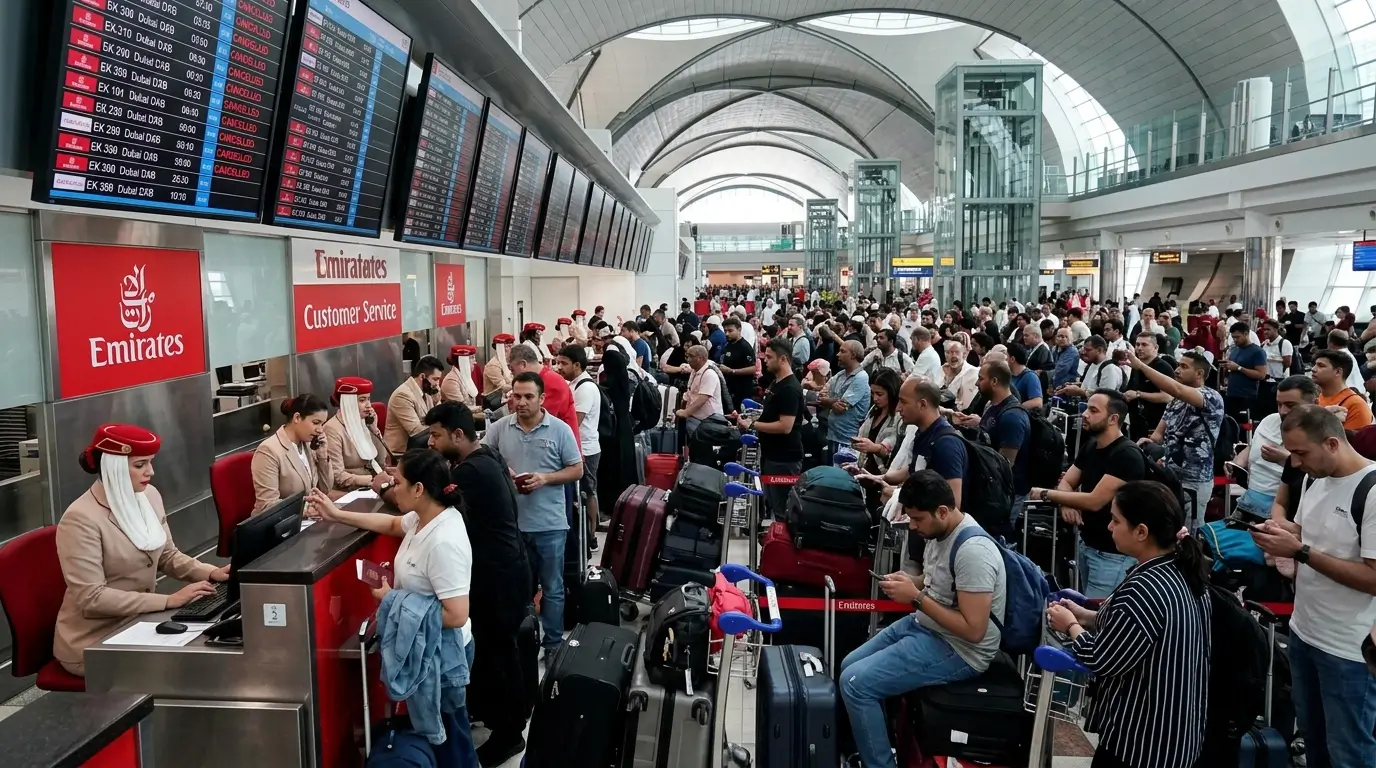
Few things disrupt a trip like a cancelled flight, and when the airline is Emirates, the effects reach far beyond one airport. Dubai is one of the busiest connecting hubs in the world, so a single cancellation notice can strand passengers in London, Birmingham, Mumbai, Nairobi and dozens of other cities within hours. Families miss reunions, business travellers lose meetings, and holidaymakers find their plans in limbo.
This guide explains why Emirates cancels flights, who is most affected, and the practical steps to take if your booking is disrupted. It is based on recent reports of airline notices and passenger advisories. Policies change quickly, so always confirm the latest terms on the Emirates website.
Why Do Emirates Flights Get Cancelled?
Regional conflict and airspace closures
The biggest recent disruption followed regional conflict. In early March 2026, reports said Emirates had suspended all operations in and out of Dubai because of airspace closures across the region. Other airlines also grounded or cancelled flights to the Gulf at the same time, and flights between Europe and Asia were rerouted through Saudi Arabia or the Caucasus.
The effects lasted for weeks. By late April, the Birmingham Airport service was still being cancelled, and Emirates was operating a reduced schedule to more than 100 destinations at roughly 65 percent of its full capacity, according to its president, Tim Clark. Passengers were urged to check their flight status even after checking in.
Route-specific suspensions
Emirates has also suspended individual routes for extended periods during times of instability. In earlier episodes, flights to cities such as Amman, Beirut, Tehran, Baghdad and Basra were suspended for days or weeks. Passengers transiting through Dubai to those destinations were not accepted for travel from their point of origin, which caught many connecting travellers by surprise.
Weather
Dubai doesn’t see much rain, but when it comes, the effect can be large. During heavy rain, Emirates has cancelled flights to destinations including Istanbul, Johannesburg, Nairobi, Cairo, Amman and Singapore, and warned of delays as flights were rescheduled. Weather elsewhere matters too. When Hurricane Irma threatened the United States in 2017, the airline cancelled its services to Fort Lauderdale and Orlando.
Who Is Most Affected?
Direct passengers with a booking on a cancelled flight are the most obvious group.
Transit passengers often face the toughest situation. If your final destination is affected, you may be refused boarding at your starting point, even if your first flight is operating normally.
Codeshare and partner bookings can complicate matters. Passengers connecting onto flydubai or other partner flights may need to deal with more than one airline.
Third-party bookings require a different process. If you booked through a travel agent or an online platform, your first call is usually to them rather than to the airline.
Step-by-Step: What to Do If Your Flight Is Cancelled

Step 1: Check your flight status before going anywhere
Use the flight status page on the Emirates website or app before heading to the airport. Past advisories repeatedly urged travellers to check the latest information before leaving home, and some told passengers to keep checking after check-in.
Step 2: Update your contact details
Open “Manage Your Booking” and confirm that your phone number and email are correct. The airline has asked customers to do this so that they can receive timely notifications about changes.
Step 3: Choose between rebooking and a refund
During the 2026 disruption, Emirates said affected travellers could rebook an alternative flight or request a refund. Passengers who had booked flights after a certain date were also offered one free date change across all cabins. Terms can vary depending on your travel dates and fare type, so check the current policy.
Step 4: Contact the right party
If you booked directly with Emirates, contact the airline. If you booked through an agent, contact the agent first. Airlines have repeatedly given this advice during cancellations.
Step 5: Keep every record
Save booking confirmations, cancellation emails, screenshots of the flight status and every receipt for expenses such as hotels, meals and ground transport. These documents support refund requests, compensation claims and insurance claims.
Step 6: Review your travel insurance
Check whether your policy covers cancellations caused by weather, airspace closures or conflict. Many policies exclude war-related events, so read the wording carefully and notify your insurer as early as possible.
Step 7: Explore alternatives
If you need to travel urgently, compare other airlines and other routes. Before buying a new ticket, find out whether your original ticket will be refunded so you don’t pay twice.
Step 8: Plan your airport journey carefully
If you are going to Dubai International despite the disruption, allow extra time. During heavy rain, travellers were advised to expect road delays, add extra travel time and use the Dubai Metro where possible.
Smart Habits for Future Trips
- Allow longer layovers when conditions are uncertain, so one delay doesn’t ruin your connection.
- Consider flexible fares if your plans might change.
- Download the airline app and switch on notifications.
- Check official travel advice for your destination and any transit countries.
- Keep essentials in your hand luggage, such as medicines, chargers, documents and a change of clothes.
- Take screenshots of key booking details in case you lose connectivity.
- Avoid tight self-made connections, where you book separate tickets, because the second airline is not obliged to wait for you.
Understanding Your Passenger Rights

Passenger rights depend on where your flight departs from and which rules apply. Flights leaving the UK or the EU are generally covered by stronger protections than flights leaving many other regions. In general, if an airline cancels a flight, you are usually entitled to a refund or an alternative flight. Cash compensation is often not payable when the cause is an extraordinary circumstance outside the airline’s control, such as severe weather or airspace closures. Check the rules that apply to your itinerary or consult a consumer rights organisation. I’m not a lawyer, so treat this as general information rather than legal advice.
Emotional and Practical Tips for Stranded Travellers
Being stuck is exhausting, so a few small actions help:
- Stay calm and polite. Airline staff are dealing with hundreds of people, and patience often gets better results.
- Use several channels at once. Try the app, the website, the call centre and the airport desk at the same time.
- Ask for specific options. A clear request, such as “Can you rebook me on the next flight to London?”, is easier to act on than a general complaint.
- Look after yourself. Keep water, snacks and your phone charged, and arrange accommodation early if you expect a long delay.
- Tell people your plans. Let family, employers and hotels know about changes so they can adjust.
FAQs
The main causes are regional conflict and airspace closures, severe weather such as heavy rain, and route-specific suspensions during periods of instability.
Use the flight status page on emirates.com or the Emirates app. Check again before leaving for the airport, and even after you have checked in.
Check your status, then update your contact details under “Manage Your Booking” so you receive alerts. Next, choose between rebooking and a refund.
In recent disruptions, Emirates has offered affected passengers the choice of rebooking or requesting a refund. Terms depend on your fare, dates and the situation, so check the current policy on the Emirates website.
Some passengers were offered one free date change during the 2026 disruption. This isn’t guaranteed for every booking, so confirm with Emirates.
Conclusion
Emirates cancellations are disruptive, but they are rarely the end of your trip. The airline has said repeatedly that the safety and security of passengers and crew is its highest priority, so a cancellation is usually a precaution. The best response is to act quickly: check your status, update your details, choose a rebooking or refund option, keep records and review your insurance. With a calm and organised approach, you can turn a stressful situation into a manageable one.