
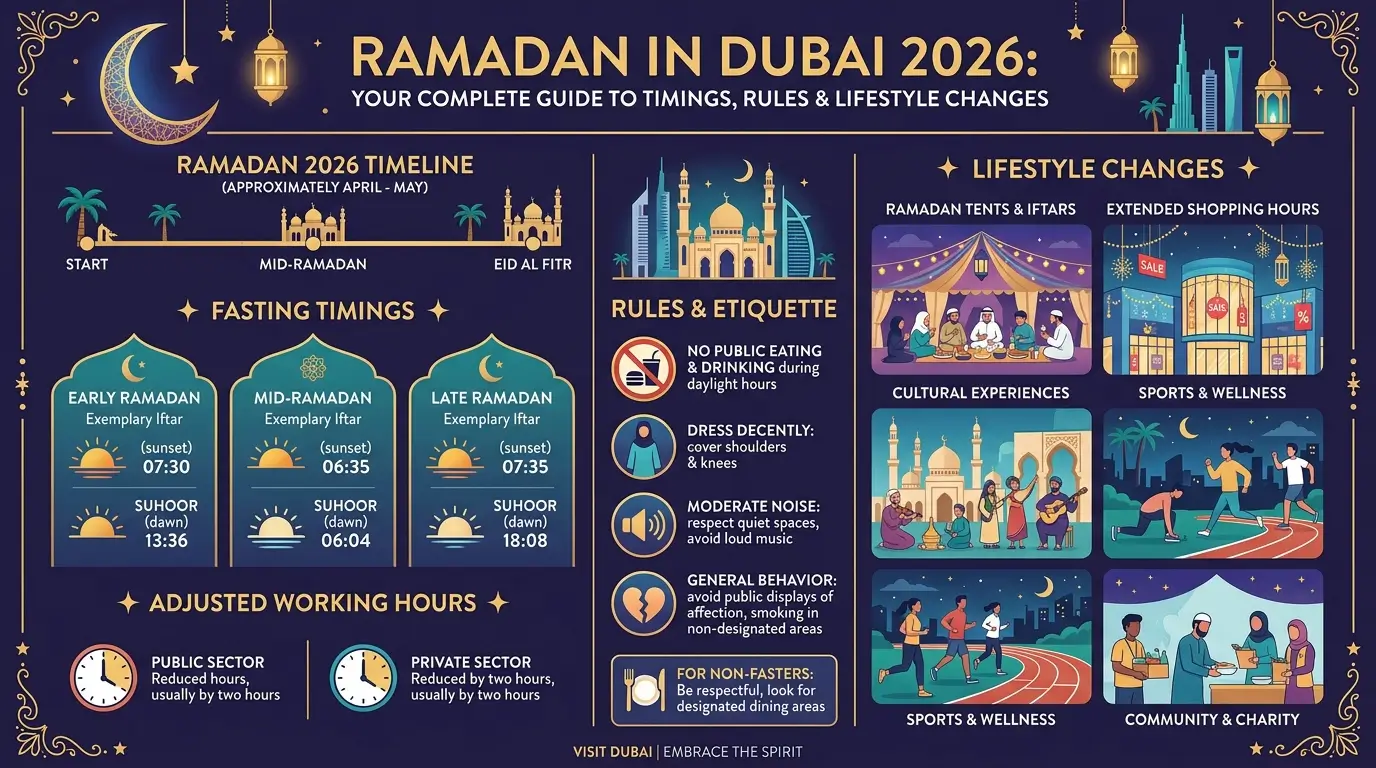
Ramadan is one of the most important and meaningful times of the year in Dubai, bringing noticeable changes to daily life across the city. From adjusted work schedules and public transport timings to special iftar experiences and extended shopping hours, the holy month transforms the rhythm of life in the emirate.
Ramadan officially began on Wednesday, February 19, 2026, following confirmation by the UAE Council of Fatwa. The holy month is expected to last for 30 days and conclude around Wednesday, March 18, depending on moon sightings.
Whether you are a resident, tourist, or experiencing Ramadan in Dubai for the first time, here are six major changes you should know about during Ramadan 2026.
1. Public Transport Timings Are Changing
Residents who rely on Dubai’s public transport system should prepare for revised schedules throughout Ramadan.
Dubai Metro timings have been adjusted to accommodate the holy month. From Monday to Thursday and on Saturdays, metro services will operate from 5am until midnight. On Fridays, trains will continue running until 1am the following day, while Sunday services will begin at 8am and continue until midnight.
Although operational hours have changed, train frequency will remain the same to ensure smooth travel during peak hours.
Dubai’s bus network will also operate on modified schedules in line with the metro timings. Meanwhile, the Dubai Tram will continue its usual operating hours, running from 6am until 1am from Monday to Saturday and from 9am until 1am on Sundays.
These changes are designed to make commuting easier during fasting hours while supporting increased evening activity across the city.
2. Restaurants Across Dubai Will Host Special Iftars and Suhoors
One of the most exciting parts of Ramadan in Dubai is the city’s incredible dining scene. During the holy month, restaurants, hotels, and luxury venues transform to host lavish iftar and suhoor experiences.
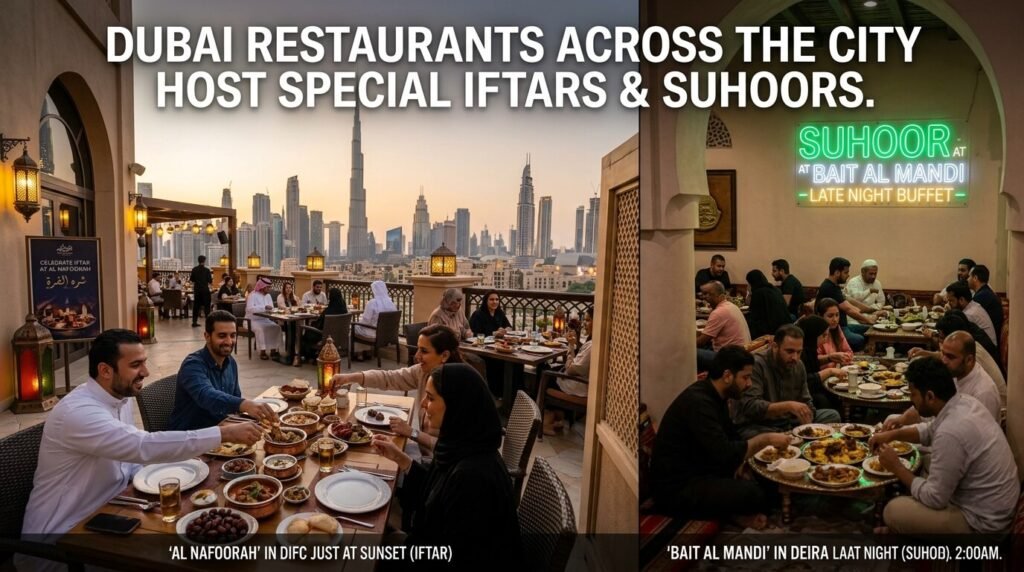
Muslims fast daily from sunrise to sunset during Ramadan, and the fast is traditionally broken with a meal known as iftar. Families and friends gather after sunset to enjoy dates, Ramadan juices, dried fruits, and large traditional meals.
Dubai’s top hotels and restaurants introduce exclusive Ramadan menus, themed buffets, and beautifully decorated Ramadan tents throughout the month. Areas such as Atlantis The Palm, Downtown Dubai, and Madinat Jumeirah become especially popular for evening gatherings.
Suhoor, the pre-dawn meal eaten before fasting begins each day, is also widely available at cafés, restaurants, and Ramadan majlis across the city. Many venues remain open until the early hours of the morning to accommodate guests enjoying late-night Ramadan outings.
3. Opening Hours at Attractions and Malls Will Be Extended
Ramadan also brings changes to operating hours at Dubai’s biggest attractions and shopping destinations.
Global Village, one of Dubai’s most popular seasonal attractions, will open later than usual during Ramadan. Instead of opening at 4pm, visitors can enter from 5pm onwards. The destination will remain open until 1am between Sunday and Wednesday and until 2am from Thursday to Saturday.
Shopping malls across Dubai are also expected to extend their opening hours, with many staying open well past midnight. This gives residents and tourists more time to enjoy shopping, dining, and entertainment after iftar.
Several locations throughout Dubai will also host Ramadan markets and seasonal pop-ups. Destinations such as Expo City Dubai, Ripe Market, and Jumeirah Emirates Towers are expected to feature food stalls, cultural activities, shopping experiences, and family entertainment during the month.
The city becomes especially lively after sunset, with many people preferring to socialise and explore Dubai during the cooler evening hours.
4. Working Hours Will Be Reduced
Another major change during Ramadan is the reduction in working hours across both the public and private sectors.
For government employees, official working hours will run from 9am to 2:30pm from Monday to Thursday and from 9am until noon on Fridays. Flexible schedules and remote working options may also be available for some federal departments during Ramadan.
Private sector employees across the UAE will benefit from a reduction of two working hours per day throughout the holy month. Many companies may also offer hybrid or flexible working arrangements depending on business needs.
These reduced hours are intended to support employees who are fasting while helping people maintain a healthy balance between work, worship, and family life during Ramadan.
5. Live Entertainment Will Be More Relaxed
Dubai’s entertainment scene also changes during Ramadan to reflect the peaceful and spiritual atmosphere of the month.
Loud music, major concerts, and high-energy public entertainment are generally reduced during Ramadan. Venues across the city are encouraged to maintain a calmer environment, especially during daylight hours.
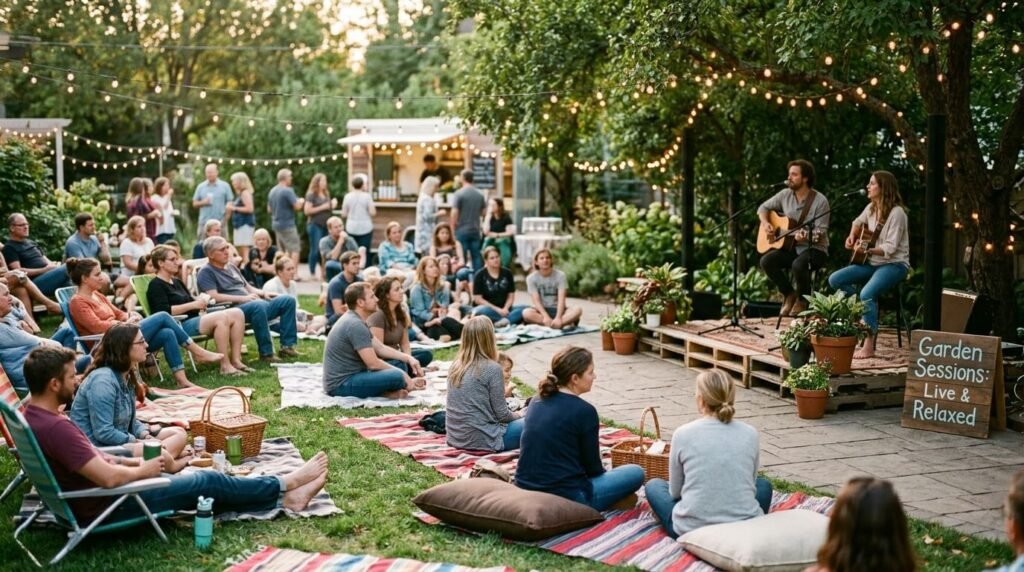
However, live entertainment does not disappear completely. Restaurants and Ramadan tents often feature traditional Arabic music and cultural performances in the evenings after iftar. Music is usually played at lower volumes and designed to create a relaxed atmosphere for guests.
Live performances are also scheduled later in the evening to avoid conflicting with prayer times.
6. Ramadan Etiquette Becomes Important Across the City
Ramadan is a deeply respected and spiritual time in the UAE, and visitors are encouraged to be mindful of local customs and traditions.
Residents and tourists should dress modestly in public places, avoid loud behaviour, and remain respectful of those who are fasting. While Dubai is more relaxed than in previous years, understanding Ramadan etiquette remains important.
Many people also use the month as an opportunity to focus on charity, community gatherings, and spending time with loved ones.
Overall, Ramadan creates a unique atmosphere in Dubai, blending spirituality, culture, dining, and nightlife into one of the city’s most memorable seasons.
FAQs:
Ramadan 2026 officially began on Wednesday, February 19, following the moon sighting announcement by UAE authorities.
Dubai experiences several lifestyle changes during Ramadan, including shorter working hours, revised public transport schedules, extended mall timings, quieter entertainment, and special iftar and suhoor events across the city.
Yes, both private and public sector employees receive reduced working hours during Ramadan. Private sector workers usually get two fewer working hours daily.
es, Dubai Metro, buses, and some public transport services follow adjusted schedules during Ramadan, with extended evening operating hours.
Yes, tourists and non-fasting residents can eat and drink in designated areas and restaurants during Ramadan, but respectful behaviour in public is encouraged.